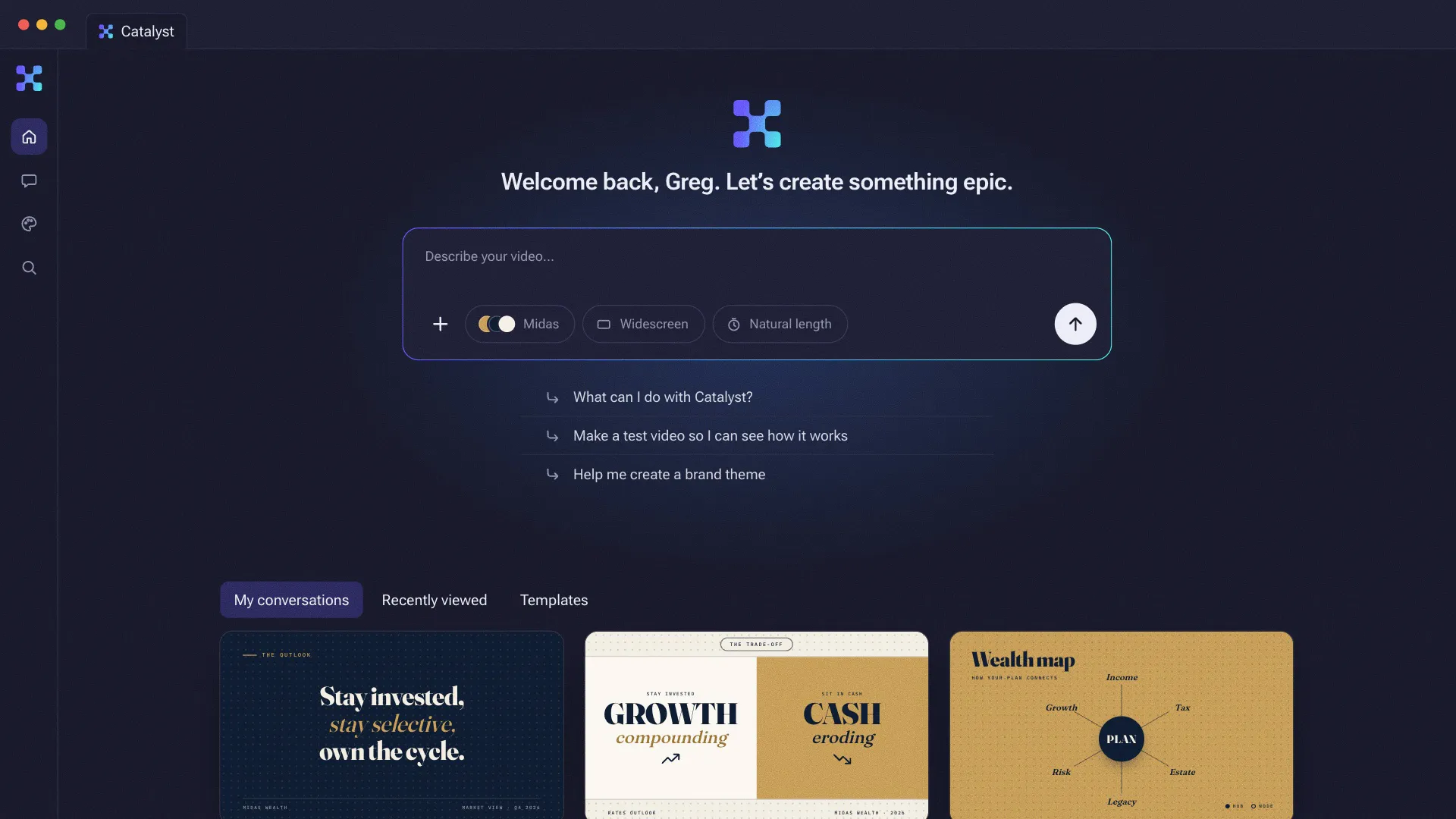
I turned a weekend prototype into the future of Socialive’s platform, validating demand with enterprise buyers and leading the product from initial vision through early access.
- Team
- Cross-functional team across product, engineering, design, and go-to-market
- Timeline
- May 2026–present Status: Early access
- Outcome
- Became the company’s product roadmap, with nearly all design and engineering resources focused on Catalyst. 60 opportunities, 170+ qualified leads, 5 active design partner accounts.
The opportunity
Enterprises record experts and advisors every day, but turning those recordings into polished, on-brand video requires editing skills most employees don’t have. Socialive also required a recording to make any video, which left out people uncomfortable on camera and content that already existed as documents, emails, or web pages. I saw an opportunity to use AI to close both gaps without sacrificing enterprise control.
Catalyst is an AI video platform that polishes enterprise recordings into finished, on-brand videos, and creates new ones from a document, image, web page, or simple prompt, all within rules each organization controls.
From prototype to strategy
I built a working prototype in a weekend using Claude as a coding partner. It turned a website, a PDF, and an image into short videos from a prompt. The test that mattered most was a real recording: It read the transcript and built graphics around what was said, proving the core use case worked.
Within a week, I was pitching it to clients. Across 10+ sales demos, enterprise buyers expressed interest before development began.
The response helped secure leadership buy-in. Catalyst became the company’s product roadmap, with nearly all design and engineering resources now focused on building its future.
Designing for enterprise control
Socialive’s customers are large enterprises in regulated industries, where every video goes through brand, legal, and compliance review before it’s published. Working closely with these teams, I knew AI that produced a different result every time would never clear that review.
They needed consistent structure, approved messaging, and brand compliance across every version. Without those controls, faster production didn’t mean faster approval.
That made determinism the core design problem: AI had to be flexible in execution and predictable in output.
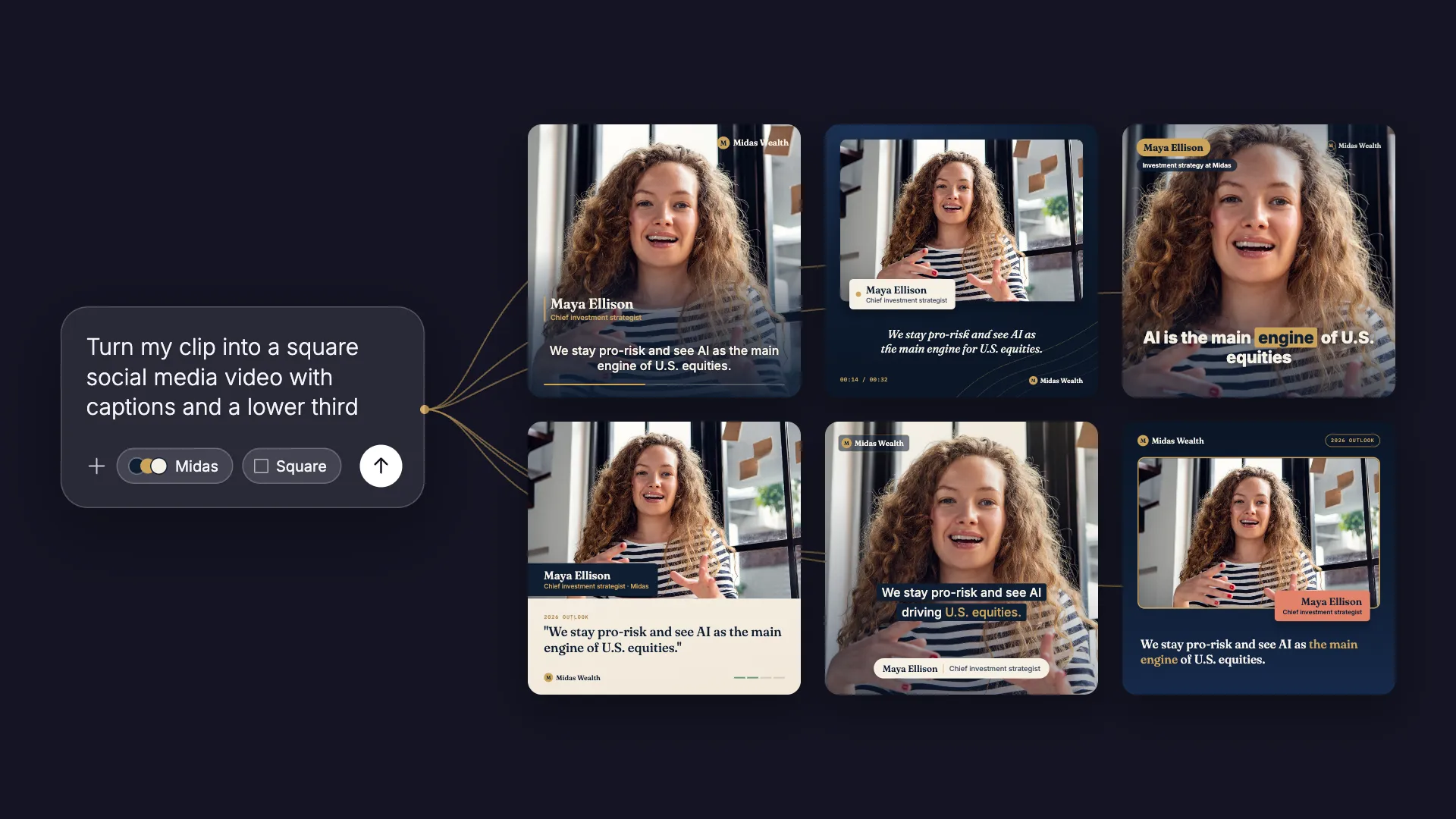
Research and customer feedback shaped a system for governing AI output at the source.
- Themes define visual identity. Colors, fonts, and styling.
- Templates preserve structure. I separated visual themes from structural templates so teams can change the look without breaking the approved flow.
- Content rules govern messaging. Approved language, restricted terms, and cleared assets.
Together, these controls give enterprises consistency without sacrificing flexibility.
Building with customers
I brought a cross-functional team together to turn recording, editing, review, and publishing into one seamless workflow that keeps every video on brand and compliant. Our customers produce hundreds or thousands of videos, so every second saved in that workflow multiplies across all of them.
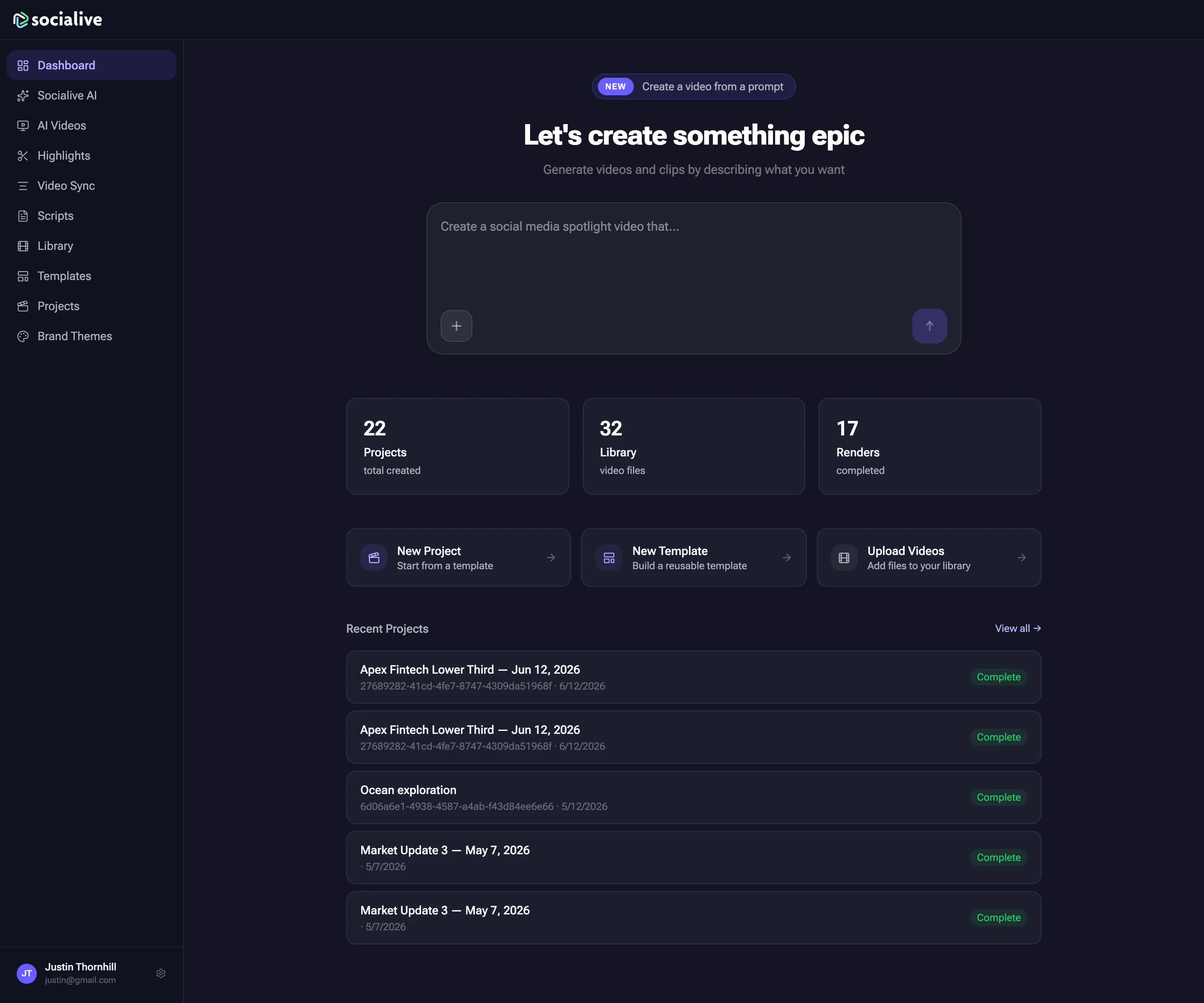
I continued rapidly prototyping in code to resolve interaction and user experience questions before engineering implementation. As the product evolved, customer feedback helped expand Catalyst to include recording, publishing, and AI enhancement tools.
I established a recurring feedback process with five active enterprise design partners, working with our product team to shape the product around real customer needs. I bring developers into these sessions so they can observe real users interacting with the product firsthand, grounding implementation decisions in actual behavior rather than assumptions.
Bringing Catalyst to market
I shaped the go-to-market story across the event experience, product demo, and sales enablement.
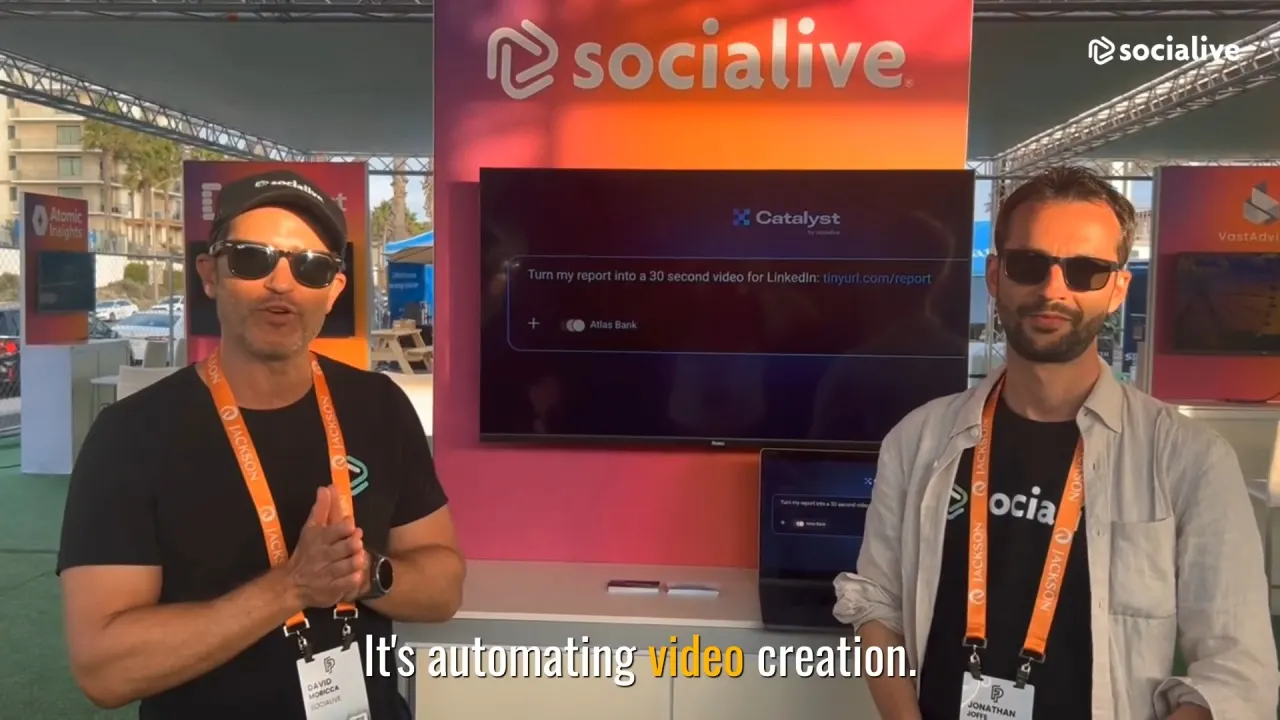
At FutureProof Festival, Catalyst helped generate 170+ qualified leads against a target of 150 and 60 opportunities against a target of 50.
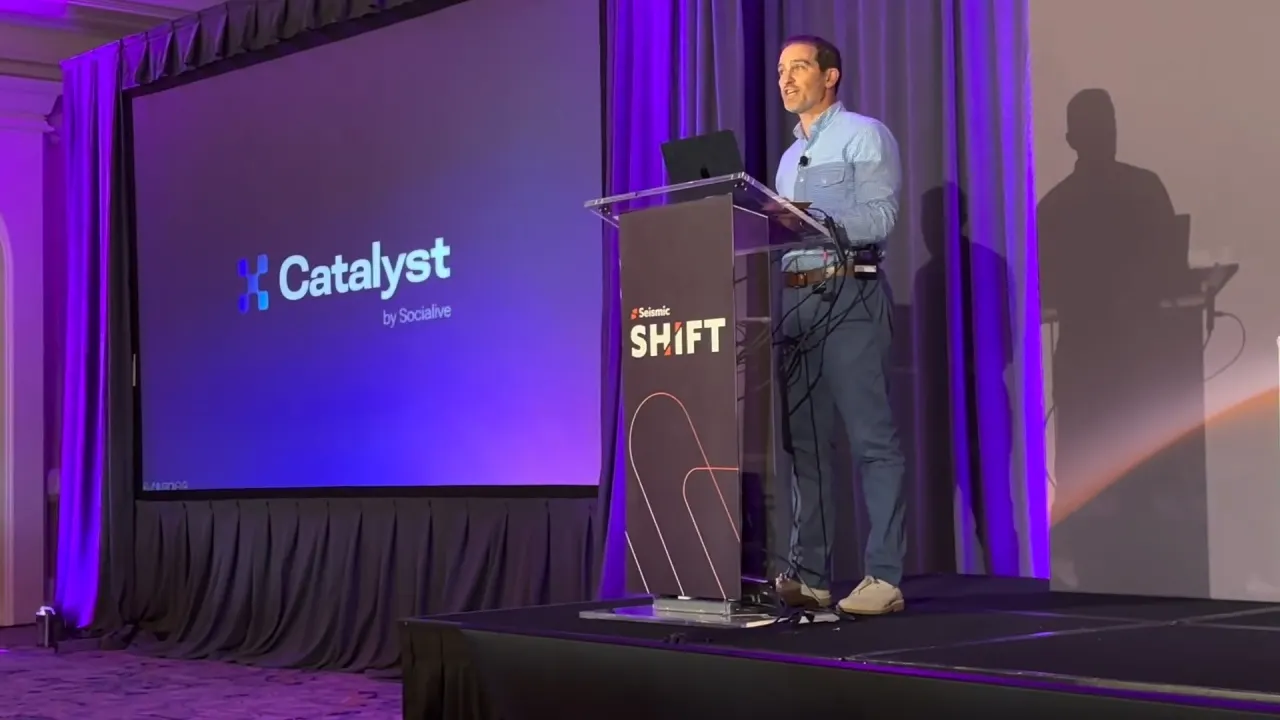
Most recently, our CEO presented on the main stage at Seismic Shift in Carlsbad, California, with a video I created in Catalyst, the product telling its own story in front of a live audience.
Brand identity is covered in the Catalyst brand case study.
Impact and what’s next
- Company strategy: Catalyst became the roadmap, with nearly all design and engineering resources dedicated to its development.
- New use cases: Video no longer requires a recording. Teams can start from a document, image, web page, or prompt, and monthly video output is up 180% across early access accounts since adopting Catalyst.
- Speed: Went from prototype to first client pitch in one week.
- Pipeline: 60 opportunities against a target of 50.
- Demand: 170+ qualified event leads against a target of 150.
- Customer partnership: Five active enterprise design partners shaping product development through recurring feedback sessions.
The next step is governed video production: catching policy, language, and brand issues before review. The goal is to make enterprise video easier to scale without removing human oversight.